

When you leave a job, your 401(k) doesn’t follow you. A 401(k) rollover is one option, but you have four: leave it, move it to your new employer’s plan, roll it to an IRA, or cash it out. The right one depends on fees, investment choices and how many accounts you want to keep track of, and there’s one mistake that can cost you 20% up front.
Here’s how each option works, in plain English.
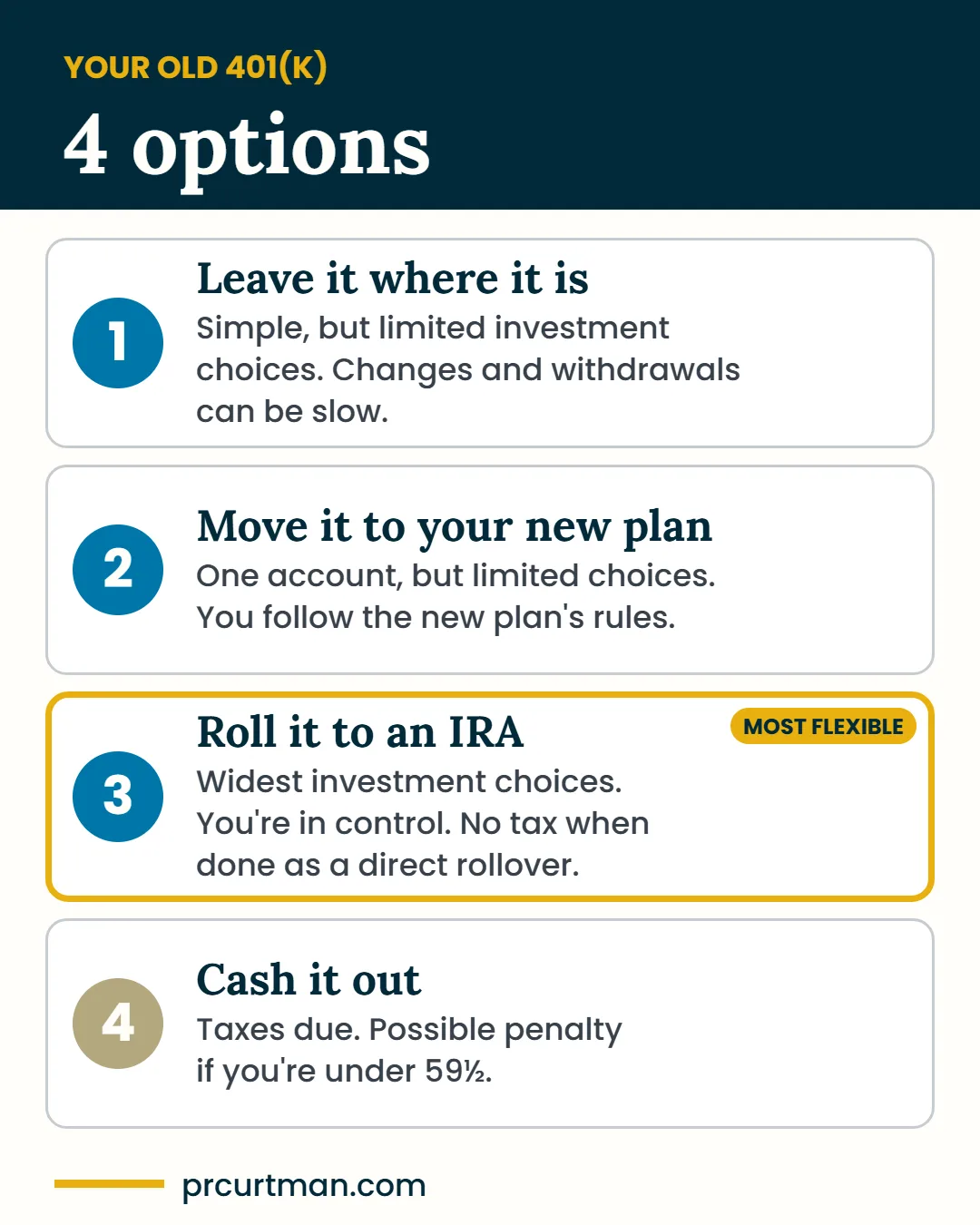
1. Leave it where it is
Many plans let you keep your money right where it is after you leave. It’s the easiest choice because you don’t have to do anything.
The catch is that out of sight tends to mean out of mind. Old accounts drift. Nobody rebalances them, and fees keep coming out whether you look or not. Most plans offer a limited menu of funds, and some can be slow to process changes or withdrawals. If you have two or three old 401(k)s from past jobs, it gets hard to see your whole picture.
Good fit if: your old plan has low fees and good investment choices, and you’ll actually keep an eye on it.
2. Move it to your new employer’s plan
If your new job has a 401(k) that accepts rollovers, you can move the old money in. That gives you one account instead of two.
You’re limited to the investment menu your new plan offers, and you follow that plan’s rules on changes and withdrawals. It’s worth checking the fees and choices before you move.
Good fit if: your new plan is strong and you want things simple.
3. Roll it to an IRA
An IRA is an account you own and control, not tied to any employer. A rollover to an IRA usually gives you the widest choice of investments, puts you in control, and lets you combine several old plans into one place. Done as a direct rollover, the move itself isn’t taxed.
IRAs and 401(k)s have different rules on a few things worth knowing: protection from creditors, how early withdrawals work, and how employer stock is handled. Florida law generally gives IRAs strong protection, but if any of those matter to you, ask your attorney or tax professional before you move.
Good fit if: you want more control, more investment choices, or one account for several old plans.
4. Cash it out
You can take the money as cash. It’s almost always the most expensive option.
The withdrawal counts as income, so it’s taxed. If you’re under 59½, you may owe an extra 10% penalty on top of that, with a few exceptions. The plan will also hold back 20% for federal taxes before you see a dime. For most people, cashing out turns a retirement account into a much smaller check.
Good fit if: almost never. If you need the money, talk to someone first about other ways to get it.
The 401(k) rollover mistake that costs people 20%
There are two ways to move a 401(k):
- A direct rollover. The money goes straight from your old plan to the new account. Nothing is withheld, and you never touch it. This is usually the way to go.
- An indirect rollover. The plan sends you a check, minus 20% withheld for taxes. You then have 60 days to deposit the full amount, including the 20% you never received, or the shortfall counts as a withdrawal.
If you’re moving money, ask for a direct rollover by name. Moving an IRA you already have? See IRA Rollovers and Transfers.
Where we fit in
We’re a fee-only fiduciary, so we’re required to put your interests first, and we don’t earn commissions on anything we recommend.
If you choose to roll your 401(k) into an IRA we manage, we’re paid our advisory fee for that work. As a fiduciary, our recommendation is based on what’s best for you, and sometimes that means leaving your money right where it is.
Your next step
- Want the bigger picture? Get the free Retirement Income Blueprint. It walks through turning savings into a paycheck you can count on.
- Have a quick question first? Ask it anytime in the chat on this page.
- Ready to talk it through? Book a call with Paul. We meet by phone, video, or in person somewhere convenient for you.
This article is for education only and isn’t individual investment, tax or legal advice. Talk with your tax professional about how a rollover affects your taxes.
